
WHERE LIONS AND PEOPLE
LEARN TO LIVE TOGETHER
A Sandstorm Kenya field story from Amboseli
Community. Culture. Conservation. Coexistence.

There are places in Kenya where living alongside wildlife is not an idea discussed from a distance. It is part of everyday life. In the Amboseli landscape, communities share their home with one of Africa’s most iconic predators: the lion. Here, conservation is not simply about protecting wildlife. It is about finding ways for people, livestock and lions to continue belonging to the same landscape.
Recently, the Sandstorm Kenya team travelled to Amboseli to spend time with the Lion Guardians team and, most importantly, the Guardians themselves ,the people doing this work every day. Sitting together beneath the open sky, listening to stories from the field, we were reminded that some of the most powerful conservation work begins not with separating people from wildlife, but with understanding the relationship between them.

At the heart of Lion Guardians is a community-led approach to coexistence. The Guardians bring an intimate knowledge of their land, livestock and wildlife to the work of tracking lions, helping recover lost livestock and responding when conflict threatens to escalate. Their role reflects something fundamental: the people who live alongside wildlife are not on the edge of conservation - they are central to it.
Our visit gave us the opportunity to move beyond the idea of conservation as statistics and see the human relationships behind it. We listened. We learned. We heard about the realities of sharing land with predators, and about the knowledge, patience and trust required to make coexistence possible.

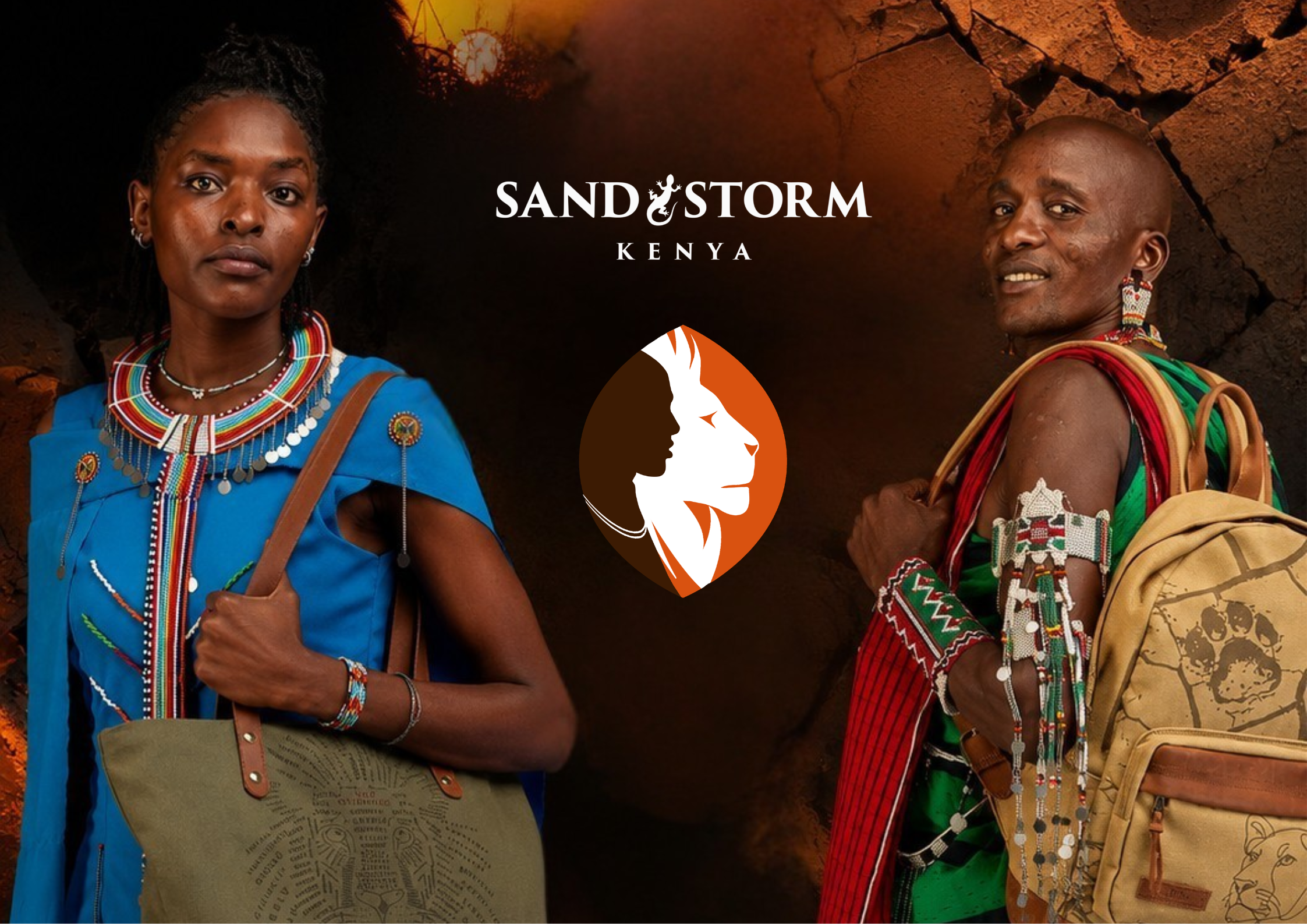
For Sandstorm, there is something deeply familiar in that philosophy. Our bags have always been shaped by Kenya by the landscapes we travel through, the materials we work with and the hands and stories that give each piece its character. During the visit, we shared a selection of Sandstorm pieces carrying artwork inspired by lions and the landscape.

Seeing those pieces in Amboseli gave them a different meaning. A lion rendered across canvas can be beautiful on its own. But surrounded by the people who walk these landscapes and help protect the lions living within them, the image becomes connected to something larger to heritage, coexistence and the knowledge carried by communities who have lived beside wildlife for generations.

Perhaps the most meaningful moments were also the simplest: standing together, exchanging stories, examining the bags, talking about the artwork and hearing directly from the Guardians. There was no neat separation between conservation, culture and everyday life. Here, they exist together.

We left Amboseli with more than photographs. We left with enormous respect for the Guardians and the team supporting them, and with a renewed understanding that the future of Kenya’s wildlife is inseparable from the communities who share its home.
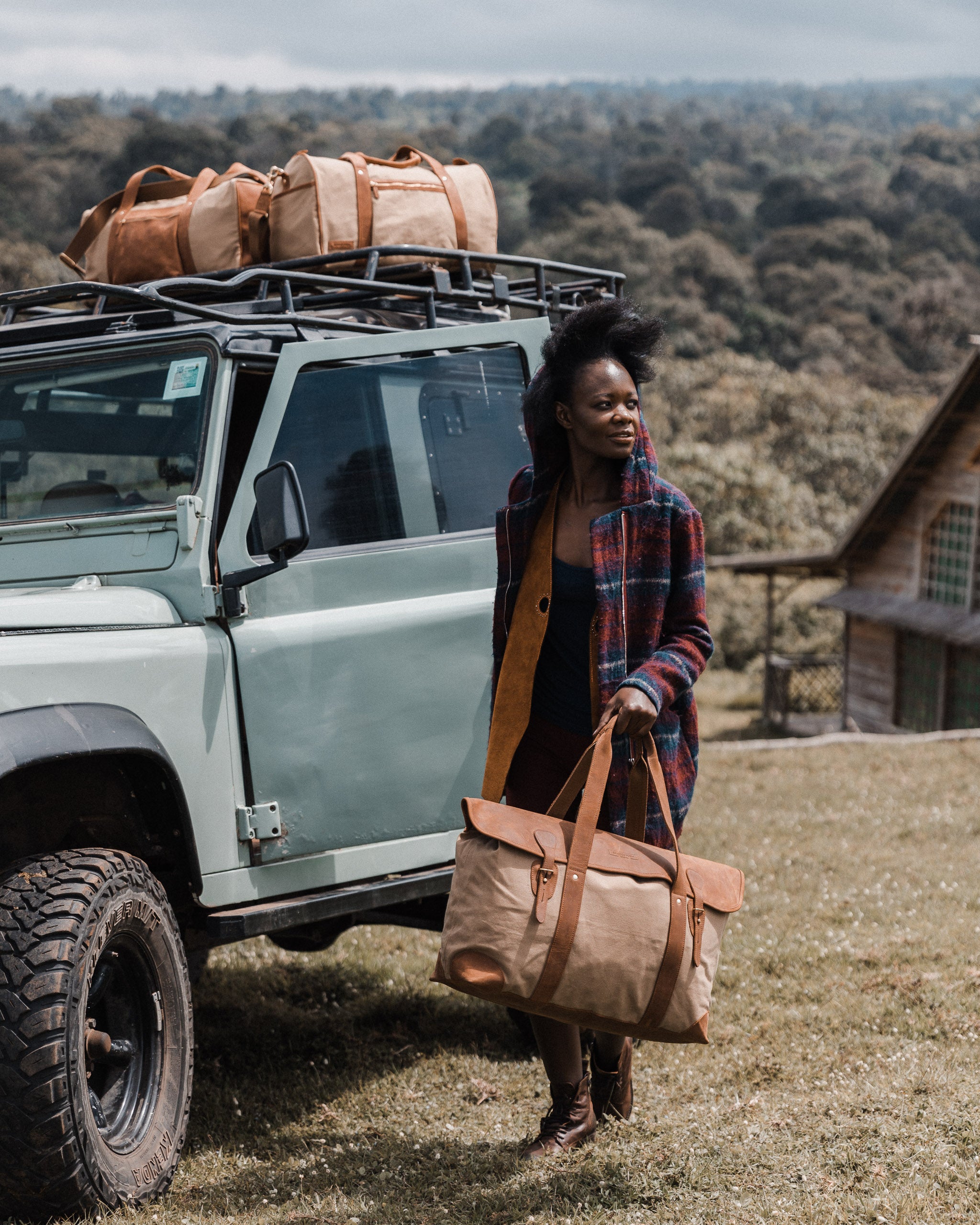
For Sandstorm, being Made in Kenya has always meant more than geography. It means recognising the landscapes and stories that shape us. It means celebrating knowledge rooted in this place. And it means finding meaningful ways for what we make to remain connected to the country from which it comes.

Because the lion’s story is not only a story of wildlife.
It is a story of people, land, culture and coexistence.
Our sincere thanks to the Lion Guardians team and the Guardians of Amboseli for welcoming us, sharing their knowledge and allowing us to experience their work firsthand.